
As solar developers, we’ve all been there: a project looks phenomenal on paper, but the moment boots hit the ground, the reality of the landscape sets in.
In highly price-sensitive markets, managing CAPEX is a balancing act. It is easy to evaluate a solar tracker strictly by its upfront per-watt price tag. However, the true financial drain of a utility-scale project rarely stems from the hardware baseline. Instead, it is hidden in civil engineering, the weeks spent grading undulating topography, the logistical nightmares of remote transit, and the labor-intensive assembly of hundreds of thousands of loose components.
When you are operating on razor-thin margins, unpredictable geotechnical and terrain conditions can instantly compromise your Total Installed Cost (TIC). That is exactly why we redesigned our utility-scale architecture. To aggressively drive down CAPEX, hardware must actively solve for site complexities before construction even begins.
How we are eliminating hidden costs in the field
1. Eliminating civil engineering extravagance
Massive earthworks are a financial black hole. Grading land to make it uniform not only demands heavy machinery and weeks of labor, but it also triggers complex environmental permitting and risks severe long-term soil erosion.
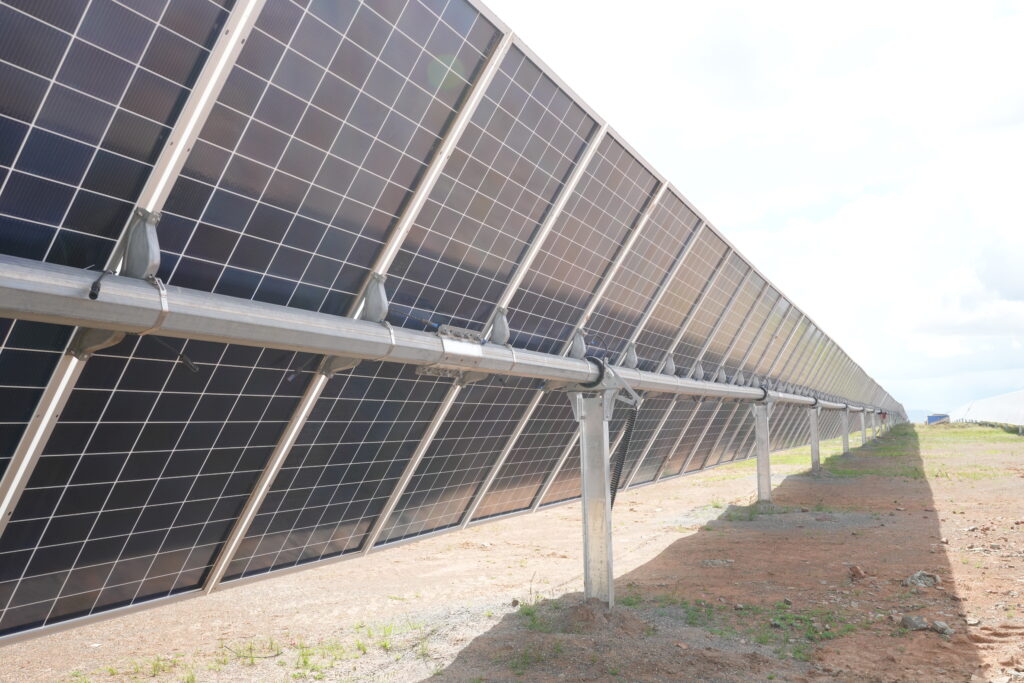
We developed Terrain Response™ to entirely circumvent this step. By allowing individual posts to accommodate slope variations seamlessly, our trackers naturally follow the natural contours of the land. This approach reduces earthmoving requirements by up to 90%. Furthermore, because the structure adapts to uneven topographies without forcing excessive grading, foundation piles can be significantly shorter, driving down both raw steel costs and ramming time.
For 1P layouts facing unpredictable topographies, our AxoneDuo Infinity™ tracker utilizes this exact terrain-following capability. It integrates a highly flexible structure with fewer motors per string, providing EPCs with an adaptable layout that mitigates late-stage design changes and costly field adjustments.
2. Structural strength without the heavy price tag
When dealing with price-sensitive projects that utilize next-generation, large-format ultra-high-power modules, structural stability often demands heavy, expensive reinforcement.
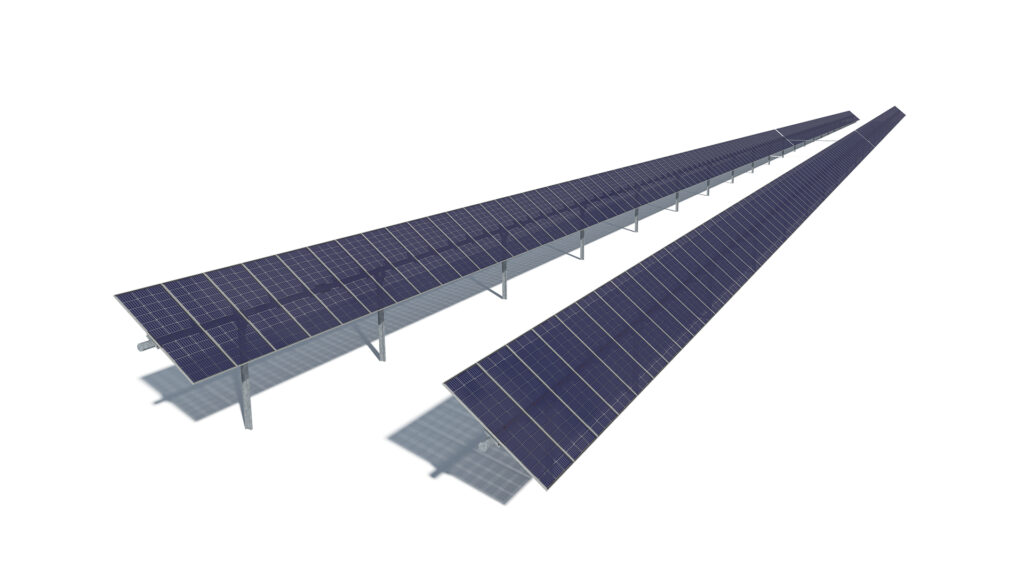
Our Monoline+ 2P tracker addresses this challenge directly. Engineered specifically for XXL and bifacial modules, its advanced dual-row architecture optimizes ground use and delivers superior stability in high winds without requiring excessive structural steel. To lower the financial barrier even further, it is delivered to the site pre-assembled, reducing on-site mechanical labor by up to 44%. In regions where skilled labor is scarce or expensive, this accelerated installation window preserves vital capital.
3. Conquering unpredictable soils and geotechnical risks
A major variable capable of inflating CAPEX is localized geotechnical volatility—whether you are dealing with the loose, shifting sands of desert landscapes or hard, rocky subsurfaces. Traditional foundations require extensive, site-specific tailoring that slows down civil works.
This is where PVH Terra™ steps in. Our dedicated foundation and structural service line analyzes site-specific soil data to deploy optimized foundation pairings. Rather than applying a generic, over-engineered approach that wastes steel and concrete, we tailor the pile design and embedment depths directly to the localized soil profile. This streamlines the automated ramming process, cuts material waste, and eliminates the guesswork that typically causes project delays.
The big picture: designing for total installed cost
True CAPEX reduction is not achieved by sacrificing hardware quality; it is achieved by optimizing intelligence, logistics, and installation speeds. By deploying solutions that adapt directly to the environment rather than trying to reshape the landscape to fit the hardware, we ensure developers protect their margins from day one.
When you eliminate 90% of earthworks, slash on-site labor times, and minimize steel volume through smart engineering, your Total Installed Cost drops dramatically. That is how you win in price-sensitive markets—by ensuring that no terrain stands in the way of profitable solar energy.
“Over 2.5 GW+ of installations have proven one thing: smart engineering beats heavy machinery every time. Our terrain-adaptive tracker technology doesn’t just hold modules, it solves site complexities. By eliminating excessive civil works and utilizing factory pre-assembled components, we routinely compress construction schedules and drive down TIC for our partners.” said Varun Pratap Singh.
