
Blog by Yuxi Zhang, PVH Sales Manager.
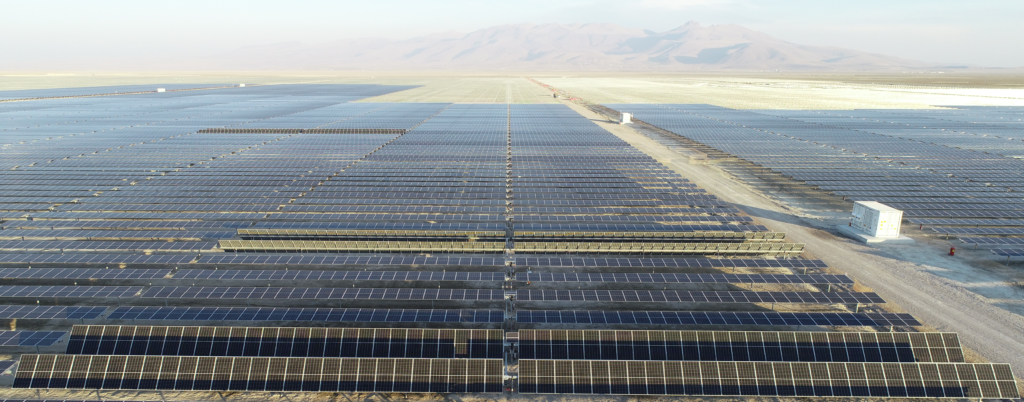
Picture this: a wall of sand and violent wind gusts rolling across the desert, followed by unprecedented torrential downpours flooding vast solar fields. Across the Middle East and Africa (AMEA), scenes like this are no longer rare anomalies—they are our new climate reality. With regional solar capacity set to skyrocket from 22.3 GW in 2024 to over 115 GW by 2030, the multi-billion-dollar question isn’t just how much clean energy we can build, but whether our assets can survive the fury of nature. To protect these investments, we must completely reimagine solar resilience.
Why waiting for the storm is a fatal mistake
Here is a brutal truth from the field: if you wait for local sensors to register peak wind speeds before reacting, you have already lost. When sudden microbursts hit a solar plant, passive or delayed responses trigger catastrophic structural fatigue, torsional divergence, and shattered modules within minutes. True readiness begins long before the first storm cloud gathers on the horizon. It requires an interwoven ecosystem engineered from day one—combining rock-solid physical design, lightning-fast stow mechanics, predictive weather controls, and relentless long-term support.
Yuxi says: “Changing climates have become a norm these days, our trackers are being proactively developed each time to tackle this issue at the ground level, our strategies are always improving to enhance the customer experience”
The four pillars of unshakeable resilience
1. Muscle and backbone: Structural engineering
Every resilient plant starts with uncompromising structural muscle. Systems built with tight assembly tolerances, heavy-duty post heads, and specialized torque tube dampening absorb punishing mechanical loads without flexing into destructive oscillations. PVH’s AxoneDuo Infinity exemplifies this design philosophy, delivering unwavering stability even under the massive physical profile of large-format XXL modules in harsh desert environments.
2. Split-second defense: TotalStow™ strategy
When severe winds strike, every second counts. Enter TotalStow™—a sensor-driven, defense protocol that moves trackers into high-tilt safety positions (up to ±60°, or ±75° for hail) in under 2.5 minutes. Crucially, trackers move directly to the nearest full-tilt angle without sweeping through dangerous flat orientations, eliminating the threat of torsional flutter during sudden wind shifts.
3. Brains in the field: Weather-based control
Hardware needs intelligence to act preemptively. The Meteocare™ ecosystem integrates local ultrasonic anemometers and external meteorological data to stay steps ahead of environmental threats. Driven by AI algorithms like DeepTrack™, the system maximizes generation across complex terrain while standing constantly prepared to trigger defensive modes the moment extreme weather looms.
4. Constant vigilance: Lifecycle analytics
Technology is only as strong as the team standing behind it. Through ProInsights SCADA™ and dedicated regional O&M teams, operators receive real-time telemetry, predictive maintenance alerts, and actionable plant health analytics to keep assets operating at peak performance for decades.
Real-world proof: Surviving the historic Middle East deluges
The true test of engineering isn’t in a wind tunnel—it’s in the field. When unprecedented rainstorms and record winds battered the UAE and Saudi Arabia, solar installations across the region faced a severe stress test. Sites lacking advanced damping suffered major structural damage. In contrast, installations built with robust post connections and smart stow logic weathered the tempest untouched. PVH engineered the AxoneDuo Infinity™ specifically using these real-world insights. Featuring Terrain-following torque tubes, and structural dampers on every single row, it conquers extreme wind gusts and torrential washouts without requiring costly earthworks.
Powering a resilient tomorrow
As AMEA charges toward its ambitious 2030 clean energy goals, building resilience is no longer optional—it is the bedrock of energy security. By pairing structural strength with intelligent software, predictive stow, and local expertise, we can ensure that our solar investments stand firm and continue delivering reliable power, no matter what weather tomorrow brings.
Check out our products and services at www.pvhardware.com (https://shorturl.at/V9D2J)
