
Author: Tejvinder Singh, Project Engineer, PVH
In utility-scale solar, distance equals risk, and shrinking the map between the factory floor and the project site is the most effective way to eliminate logistical losses. At PV Hardware (PVH), we have restructured our global footprint to prove that localized manufacturing is the ultimate safeguard for your project’s timeline and bottom line.
Global scale, local execution
Relying on a single, centralized manufacturing hub leaves developers highly vulnerable to shipping bottlenecks, port strikes, and geopolitical friction. By decentralizing our production, we ensure critical tracker components are built closer to where they will be deployed.
- 75 GW Global Capacity: Through our direct facilities and strategic partner network, we have scaled to manufacture over 75 GW of solar trackers annually.
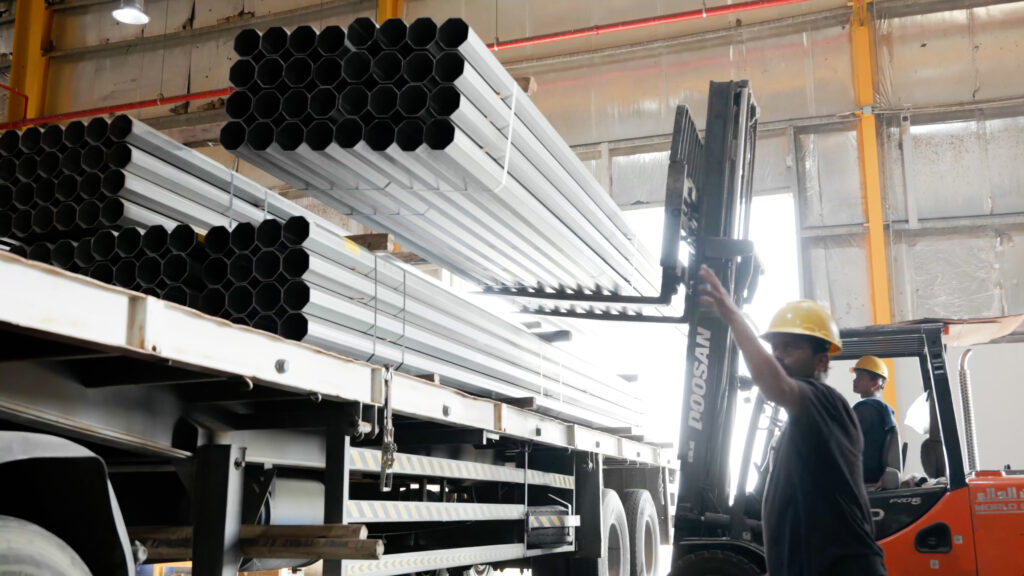
- Saudi Arabia (8 GW): Our dedicated factory in the Middle East provides a massive, localized production anchor for regional mega-projects.
- India (>12 GW): Supported by our robust network of local partners, we deliver high-volume, domestic components to one of the world’s fastest-growing energy markets.
- China (25 GW): A high-capacity regional hub ensuring fluid, uninterrupted supply across the Asian continent.
Eliminating transit friction and securing timelines
The longer a product spends inside a shipping container, the higher the probability of transit damage and schedule derailments. Because our manufacturing footprint is localized, our supply lines are drastically shorter. While the global logistics industry continues to face unprecedented delays and routing crises, PVH shipments consistently arrive on time. We bypass congested ocean freight routes, delivering directly from our regional facilities to your site and eliminating the hidden costs of long-distance transit.
AxoneDuo Infinity: Reducing site-level losses
Logistical efficiency must be matched by installation efficiency on the ground. Even if components arrive on time, challenging topography can bleed a project’s budget through extensive civil works.
- Advanced Terrain Response: Engineered with flexible site adaptability, the AxoneDuo Infinity easily accommodates north-south slopes up to 15% and tolerates up to 2° of variation between posts. Unlike conventional tracker designs that demand painstaking laser leveling, our intelligent system automates post-ramming directly to match the ground contour.
- Minimizing Cut and Fill: Because the system easily absorbs up to a 15% North-South slope rather than flattening the earth to match the tracker, we adapt the tracker to the earth. Through this method of navigation, hilltops do not need to be carved away (cut) and valleys do not need to be packed with imported soil (fill). The tracker simply rolls with the native topography.
- Accelerated Deployment: Eliminating cut and fill does more than just stop dirt from moving. It instantly erases the cascading costs of heavy earthmoving machinery, diesel fuel, dust mitigation, and the weeks of schedule time lost waiting for freshly filled land to properly settle and compact before pile ramming can even begin.
- One Architecture, Any Landscape: Whether a project sits on a perfectly flat desert plain or a highly undulating mountainside, the core tracker hardware remains exactly the same. We do not manufacture bespoke, custom-engineered parts just because the ground changes. The AxoneDuo Infinity handles extreme slopes and flat ground using the exact same standardized structural components. This also streamlines inventory management during execution and O & M phases.
True project security comes from controlling the variables. By combining a decentralized manufacturing network with site-adaptive technology like the AxoneDuo Infinity, we are systematically engineering delays and physical losses out of the solar supply chain. When you build with PVH, you are buying the certainty that your equipment will arrive on schedule and install without friction.
Read more such stories on our website www.pvhardware.com, engage with our team members directly through our website, we are always writing more blogs to highlight our people and project case scenarios.
