
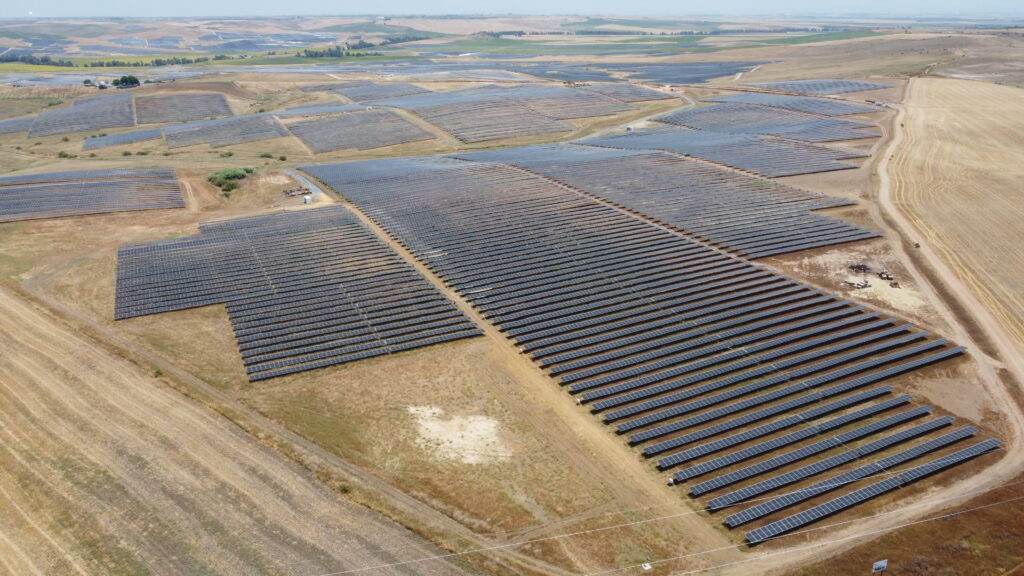
In 2026, utility-scale solar projects in the United States are being developed in a far more complex environment than in previous years. Beyond the usual pressure to reduce costs and accelerate delivery, developers, EPCs and financing stakeholders must now navigate shifting federal and state policies, interconnection delays, and continued supply chain uncertainty. In this context, project success depends on more than competitive pricing. It depends on confidence: confidence that suppliers can execute, deliver on time, provide transparent documentation, and support projects throughout their full lifecycle.
Bankability as a strategic decision factor
That is why bankability has become one of the most important decision-making criteria in the U.S. solar market. Today, bankability is no longer understood only as financial viability. It also reflects operational reliability, manufacturing strength, supply-chain traceability, and the proven ability to perform under real market conditions. For project stakeholders, choosing the right technology partner means reducing risk at every stage, from procurement and financing to construction and long-term operation.
Local manufacturing and execution certainty
At PVH USA, this approach is supported by a combination of local investment and global experience. The company operates two dedicated manufacturing facilities in Houston, backed by a total investment of $50 million, and has expanded its U.S. workforce from around 100 employees in 2024 to roughly 300 today. This growth reflects a long-term commitment to the U.S. market and gives customers greater continuity, responsiveness and execution certainty.
It also strengthens PVH USA’s ability to support domestic-content strategies through U.S.-based manufacturing and transparent documentation, including mill test and material certificates as well as audit-backed supplier traceability for key components.
Why price per watt is no longer enough
These capabilities matter because the criteria for selecting a solar partner are changing. Price per watt remains relevant, but it is no longer the only metric that matters. Developers and financiers are increasingly evaluating the overall strength of a company: its balance sheet, manufacturing footprint, track record, engineering expertise and ability to innovate.
Structural resilience and software sophistication are now central to long-term project performance, especially in sites exposed to challenging weather, uneven terrain or demanding operating conditions.
Financial strength and innovation as differentiators
PVH USA benefits from the expertise of its parent company, PV Hardware (PVH), which has supplied more than 40 GW worldwide and 6.5 GW in the United States across more than 50 plants. This global track record has enabled the company to develop advanced structural engineering solutions for extreme weather, high wind loads, seismic conditions and irregular terrain, while continuously improving control software to optimize energy production under dynamic site conditions.
As the U.S. solar market continues to mature, resilient projects will be built by partners that combine innovation, financial strength and execution discipline. In 2026, those qualities are no longer optional. They are the barometers guiding better decisions and stronger solar projects.