
In utility-scale solar projects, execution risk does not depend only on engineering, procurement, or weather delays. It also depends on what happens on site every day: how many parts need to be handled, how many installation steps crews must complete, and how much room there is for error during assembly. That is why pre-assembly has become an increasingly relevant factor for EPC teams looking to improve execution and reduce friction in the field.
Field complexity starts with the number of components
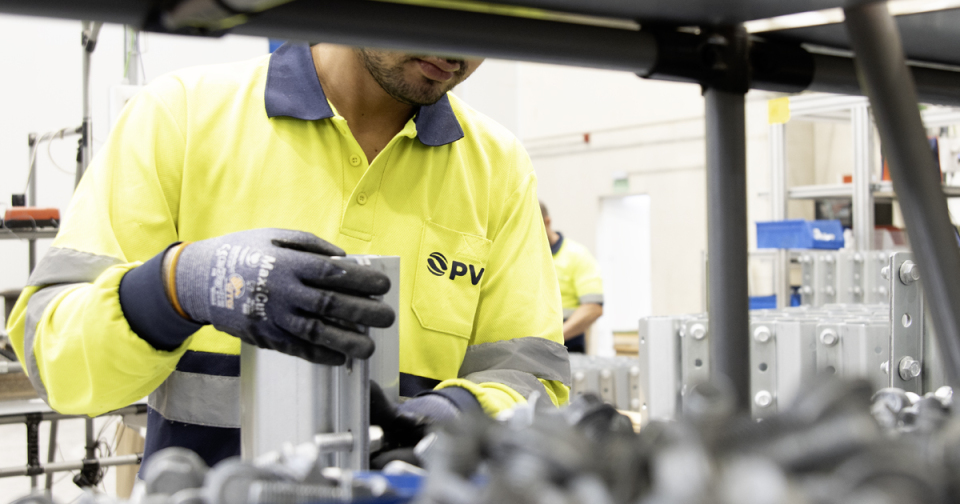
A pre assembled solar tracker changes the installation model before materials even arrive at the project site. Instead of shipping multiple loose components that must be assembled in the field, selected subassemblies are prepared in a controlled manufacturing environment and delivered as installation-ready units. This reduces the amount of work that must be completed on site and simplifies the execution flow from the very beginning.
Fewer on-site steps, smoother installation
For EPC teams, the value of pre-assembly is highly practical. First, it helps accelerate installation by reducing the number of steps that must be completed directly in the field. Fewer loose parts mean less handling, fewer internal material movements, and fewer interruptions caused by missing parts or assembly mistakes. In a context where schedule pressure is constant, simplifying what happens on site is a clear advantage.
Lower dependence on field labor
Another major advantage of pre-assembly is its impact on labor. Labor availability, crew productivity, and installation quality remain critical variables in utility-scale solar projects, especially on large plants or remote sites. A more installation-ready system reduces manual effort at critical assembly points and supports a more organized and consistent execution process. This helps lower dependence on labor-intensive field work and makes coordination between teams easier.
More control, fewer errors, and better predictability
Pre-assembly also improves project quality and predictability. When the most sensitive or complex assemblies are completed in a controlled environment, common on-site risks such as incorrect fasteners, missing components, or material damage can be reduced. In addition, with fewer assembly interfaces in the field, variability between crews is reduced and installation consistency across the plant improves.
Modular design and more efficient logistics
This is where modular tracker design becomes more than a product feature. It becomes an execution tool. A system designed for pre-assembly can simplify logistics, reduce unnecessary on-site transfers, and support smoother installation planning. In practice, this means lower EPC schedule risk and stronger confidence in project delivery.
An execution advantage with measurable impact
PVH’s in-house pre-assembly approach shows how meaningful this model can be. By reducing on-site components by more than 70%, PVH has also demonstrated installation time reductions of 44% in selected applications. The result is a more efficient construction process, with fewer errors, lower friction, and greater control over field execution.
Building better, not just faster
For EPC teams, pre-assembly is not only about installing faster. It is about creating a more predictable, more controlled, and more efficient execution model for utility-scale solar projects. When field complexity is reduced, coordination improves, exposure to errors decreases, and it becomes easier to move forward with confidence at every stage of the project.
Looking to reduce field complexity and improve installation productivity? Discover how PVH’s pre-assembled solar trackers support a more agile and predictable EPC execution model.
