
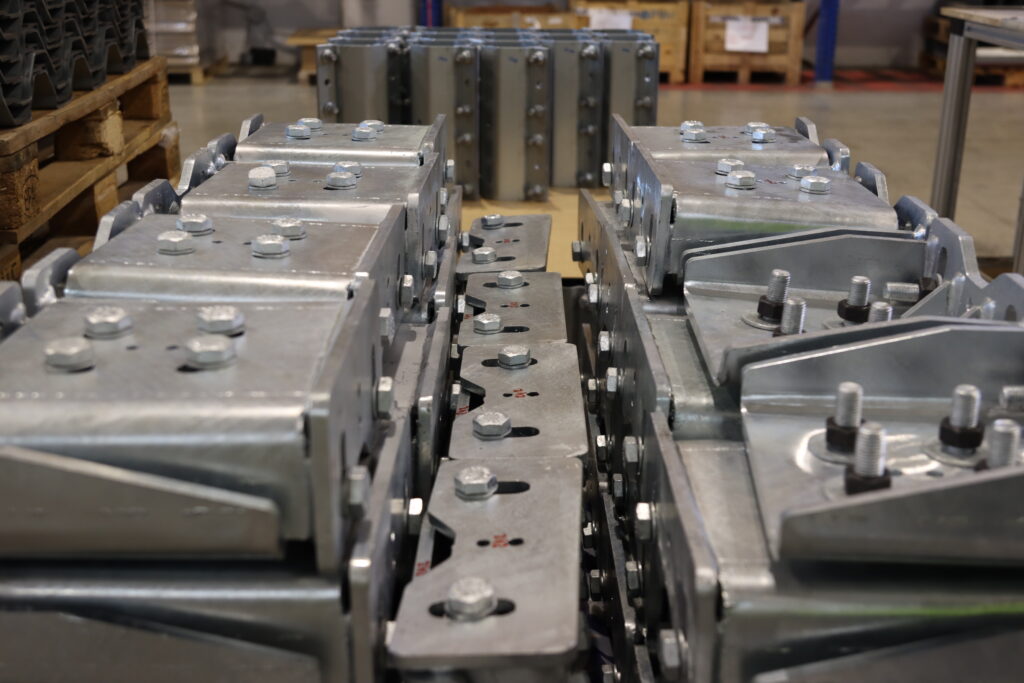
As pre-assembly becomes more relevant in utility-scale solar, more EPC teams are including it in tracker evaluations. But not all pre-assembled solutions create the same value. The key question is not simply whether a tracker arrives partially assembled. The real question is what pre-assembly changes are made on-site. When evaluating a pre-assembled solar tracker, EPC teams should not focus only on the idea of pre-assembly itself, but on its actual impact on installation, labor, execution quality, and project predictability.
The actual scope of pre-assembly
The first thing EPC teams should review is the real scope of pre-assembly. In other words, which components arrive installation-ready and which field assembly tasks are removed or simplified.
What really changes on site?
A pre-assembly approach that creates real value should reduce the number of loose parts, lower the number of on-site assembly steps, and simplify the installation sequence clearly and practically. The more visible the impact is in day-to-day field execution, the more meaningful the benefit will be.
Installation logic and modular design
The second key point is how the system affects installation. A strong pre-assembled solution should support faster solar construction, not just improve packaging or transport efficiency.
EPC teams should assess whether the modular tracker design makes installation more repeatable, easier to plan, and simpler for crews to execute.
The value should be visible in installation, not only in delivery
Pre-assembly matters when its value shows up in how the product is installed in the field, not only in how it is delivered to the project. If the system reduces steps, improves sequencing, and helps crews move faster, then the benefit is operational rather than purely logistical.
Impact on field labor
The third area to evaluate is labor. One of the main reasons pre-assembly matters is its ability to support reduced field labor. EPC teams should ask whether the solution:
- lowers manual effort at critical installation points
- reduces dependence on highly specialized field crews
- improves coordination between labor, materials, and site supervision
When more of the work is completed before delivery, crews can spend more time installing and less time assembling.
Quality control and execution consistency
Quality control is another essential factor. A pre-assembled solution creates more value when it is completed in a controlled manufacturing environment with clear quality procedures.
This can help reduce the risk of missing parts, incorrect fasteners, damage during handling, or inconsistent field assembly. In utility-scale projects, fewer assembly interfaces in the field often mean lower rework exposure and more reliable execution.
Material handling and site organization
Material handling and site organization should also be part of the evaluation. Reducing the number of individual components helps simplify storage on site, lower space requirements, and improve stock control.
This helps reduce losses, errors, and inventory mismatches while supporting a more organized and efficient workflow. In a project environment where day-to-day coordination matters, better material readiness also contributes to stronger overall productivity.
Schedule impact and project predictability
EPC teams should also assess the schedule impact. The best pre-assembled solutions do more than save time at isolated installation points. They help support a more stable and predictable project workflow overall.
By reducing field complexity, improving material readiness, and simplifying installation, pre-assembly can help reduce EPC schedule risk and improve confidence in delivery timelines.
Supplier support during execution
Finally, supplier support matters. A tracker supplier should not only provide the product, but also support installation planning, technical clarification, and execution readiness.
Pre-assembly creates the most value when it is backed by engineering coordination, manufacturing control, and a clear understanding of how projects are built in the field.
PVH’s approach: pre-assembly with an execution focus
At PVH, pre-assembly is part of a broader execution-focused approach to utility-scale solar. The goal is not only to optimize the product, but also to help EPC teams simplify installation and improve project delivery.
Conclusion: evaluating pre-assembly beyond the label
For EPC teams, evaluating pre-assembly properly means looking beyond the label and focusing on what really matters: easier installation, lower field complexity, better operational control, and stronger execution predictability.
Because in utility-scale solar, the value of pre-assembly is not only about how a tracker is manufactured. It is also about how it helps teams build the project more efficiently.
