
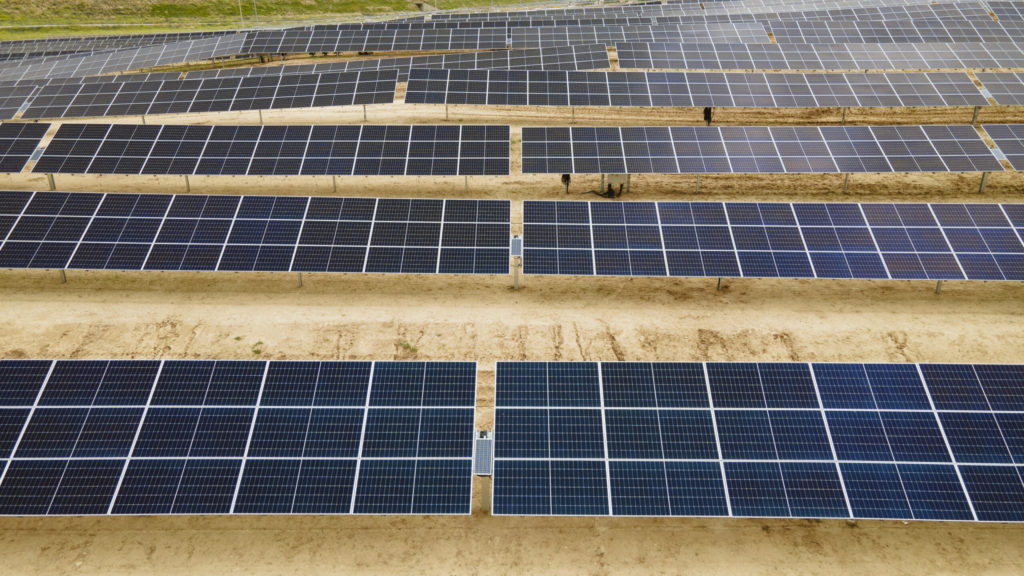
As innovation transforms what’s possible in solar development, contractors are no longer limited to flat, sunny, utility-scale land
The biggest constraint on solar has never been geography. It’s outdated thinking. Today, forward-leaning contractors are rewriting the playbook, embracing technologies that allow solar systems to be designed around the site rather than the other way around. That shift means more flexibility, more competitive bids, and greater access to challenging yet high-potential terrain. From rocky hillsides and aging rooftops to wind-swept plains and snow-heavy regions, solar installations are breaking free from the traditional mold. And for contractors, that means more business and more opportunity, anywhere the sun shines.
From “ideal conditions” to “intelligent design”
Historically, solar development was dictated by geography. Flat terrain, predictable sunlight, and mild weather were prerequisites for projects to pencil out. Anything outside those parameters – rocky ground, mountainous regions, snowy climates, high winds – was often dismissed as too difficult or inefficient to develop. For contractors, the risks far outweighed the rewards.
But those limitations are no longer holding. New technologies, materials and systems are flipping the script and turning yesterday’s “no-go zones” into today’s viable project sites. Of course, challenges like interconnection queues, permitting delays and grid access still shape project feasibility – but geography is no longer the dealbreaker it once was. As distributed energy continues to gain momentum and the demand for renewable solutions accelerates, contractors equipped with the right tools can create a clear edge in an increasingly competitive market.
Technology reduces risk while expanding reach
Today’s technologies provide contractors with an array of new options when pursuing business contracts or constructing new facilities in non-traditional settings. From modules that can capture more energy in overcast conditions to intelligent tracking that adapts to rugged terrain, these systems virtually eliminate the geographic barriers that once made projects unviable. The most talked-about innovations include:
- Advanced Module tech: High-efficiency PV and perovskite solar cells are designed to make the most of every ray, even in low-light or snow-covered environments. Their strong performance in variable conditions is unlocking new territory for solar development in cloudy or less sunny climates.
- Durable mounting systems and materials: Reinforced racking, ruggedized modules and flexible substrates now make it possible to install and maintain systems in areas with high wind, hail or frequent freeze-thaw cycles. Contractors no longer need to fear the costs or risks associated with challenging terrain.
- Smart tracking systems: Trackers enhanced with Artificial Intelligence (AI) can now adapt to uneven land and changing light conditions, adjusting angles in real-time to maximize energy yield. These innovations make hillside and variable-slope installations more efficient than ever.
- Off-grid and hybrid storage integration: Advanced storage systems and hybrid configurations allow remote and weather-prone regions to maintain energy continuity. This capability expands the footprint of viable sites and empowers contractors to offer full-system solutions, even in off-grid or unreliable-grid areas.
The new solar landscape: opportunity in every region
Solar is finding a foothold in the hills, with commercial farms and pilot projects proving the viability of rugged installations. For example, ski areas from Vermont to Colorado have built solar energy facilities to help meet their sustainability goals. In addition, the Nature Conservancy is working to develop solar energy projects on former coal mines in Virginia, Tennessee and Kentucky. These projects will not only generate power but are also designed to stimulate rural economic growth. And these aren’t isolated cases; a growing number of developers are evaluating unconventional parcels as viable, thanks to policy incentives, land scarcity and better technology economics. In colder regions, innovations in snow-shedding and racking that supports snow load are making solar energy more practical and profitable in climates once thought too cold or cloudy to support it.
Even high-stress environments that experience severe wind and rain (think coastal hurricanes and Midwest thunderstorms) have become increasingly attractive for solar energy thanks to advancements in tracker design and materials. In a recent case study of its U.S.-made, single-axis trackers, PVH USA documented its technology’s success at withstanding the challenges of harsh Midwest summers and Florida’s hurricane season. According to the case study, PVH trackers survived wind loads of up to 150 mph during the 2022 and 2023 Florida hurricane season. In addition, the case study reports that PVH USA rows installed in the Midwest shed snow in minutes, and the company’s “hail-stow mode” protected modules from golf-ball sized impacts resulting in faster return to full generation and lower overall costs.
What it all means for contractors
With more viable sites on the table, contractors have more options to propose – and fewer projects are disqualified due to topography or weather. Contractors offering tech-forward solutions gain a clear edge in RFP processes. In addition, underserved niche markets like rural communities, remote resorts and industrial retrofits are now ripe for development. Those contractors who embrace complexity can command premium pricing and long-term service contracts. Staying current on emerging systems, certifications and technologies is not just good practice. Now it is a competitive necessity. Contractors who invest in training also build stronger ties with innovative manufacturers and solution providers.
Like all innovators, contractors leading the way are not just installing modules. They are solving problems, pioneering solutions, and helping shape the next generation of clean energy infrastructure. The most successful contractors treat innovation not as a technical tool, but as a mindset and a core business strategy.
Thanks to these advancements, contractors no longer need to wait for perfect land or perfect weather. With today’s technology, opportunity exists anywhere the sun shines, even in places where solar once seemed impossible. The future of solar won’t be built on flat land alone; it will be built by those willing to rethink what is possible.
Kevin Conner is Business Development Director for PV Hardware USA.