
The global solar industry is entering a new phase. Demand continues to surge, utility-scale projects are growing larger, and developers are under increasing pressure to deliver power faster and more efficiently than ever before. Yet while technology continues to evolve, one challenge is quietly reshaping the market behind the scenes: supply chain instability.
From shifting solar trade policy and rising solar tracker tariffs to procurement volatility in solar and escalating material costs, the industry is no longer operating in predictable conditions. Developers and EPCs are now managing a market where logistics disruptions, regional conflicts, tariff uncertainty, and concentrated manufacturing can delay projects by months and significantly impact project economics. In this environment, delivery capability has become just as important as tracker technology itself.
The traditional solar supply chain model, heavily dependent on centralized manufacturing and long-haul shipping, is increasingly vulnerable. Many tracker suppliers still rely on limited production hubs, exposing projects to delays caused by geopolitical instability, freight bottlenecks, and changing import regulations. Recent shifts in U.S. and global solar trade policy have only intensified these challenges, with tariffs and localization requirements forcing the industry to rethink procurement and sourcing strategies.
PVH has approached this differently
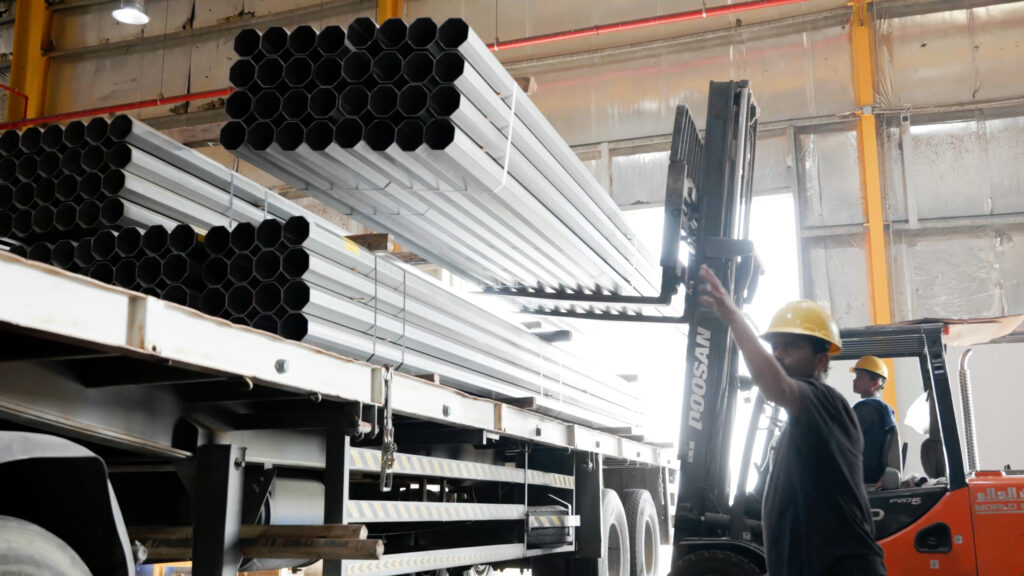
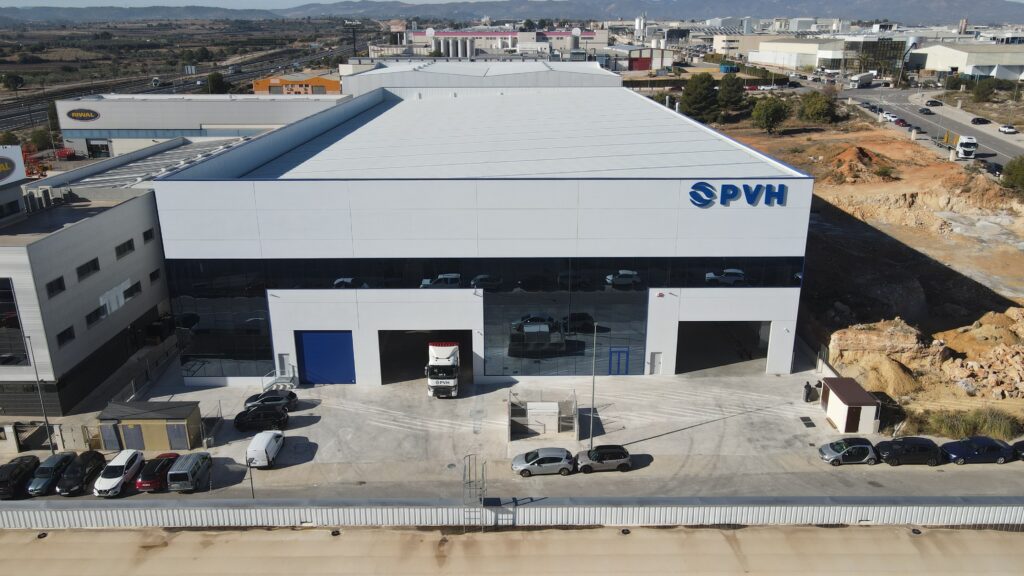
Rather than reacting to disruption, the company has built a globally distributed manufacturing strategy designed specifically for resilience and delivery of certainty. Today, PVH operates one of the industry’s strongest manufacturing footprints, with annual production capacities of 12 GW in Saudi Arabia, 14 GW in the United States, and 12 GW in Spain.
This scale matters because it fundamentally changes how projects are delivered. While competitors continue expanding manufacturing plans in response to recent market pressures, PVH already operates established facilities capable of supplying major utility-scale demand across multiple regions.
In Saudi Arabia alone, PVH’s local manufacturing presence and localization strategy positioned the company years ahead of many tracker manufacturers entering the market today. The impact extends far beyond production numbers. Localized manufacturing reduces exposure to volatile shipping routes and minimizes the risks associated with cross-continental logistics.
Regional production also helps developers navigate increasingly complex solar tracker tariffs and domestic content requirements, particularly in markets prioritizing local supply chains. At the same time, PVH combines its global factories with localized manufacturing partnerships across India, China, Australia, South Africa, Morocco, Turkey and other strategic regions. This hybrid model creates a highly flexible supply chain solar ecosystem capable of reallocating production dynamically based on market conditions, logistics constraints, and project schedules.
The result is not simply faster delivery. It is a predictable delivery.
That distinction has become critical in today’s market. The procurement volatility solar projects face today is no longer limited to equipment pricing. Material shortages, steel fluctuations, freight instability, and trade restrictions can rapidly alter project economics. A delayed tracker shipment can impact installation schedules, financing timelines, grid connection dates, and ultimately project returns. This is why developers are increasingly evaluating suppliers not only on technology performance, but on manufacturing resilience and execution capability.
PVH’s approach extends beyond manufacturing alone. By integrating pre-assembly into production processes and maintaining local engineering and technical support teams, the company reduces on-site complexity and accelerates installation timelines. Instead of solving problems after equipment arrives on site, risks are addressed upstream within the supply chain itself.
The solar industry has spent years optimizing energy yield and reducing LCOE. The next competitive battleground is operational certainty. Because in today’s market, the strongest solar tracker is no longer simply the one that performs best in the field. It is the one that arrives on time, every time, regardless of what is happening in the world around it. PVH has built and foreseen these issues at the site, and we planned to deliver on time, every time.
